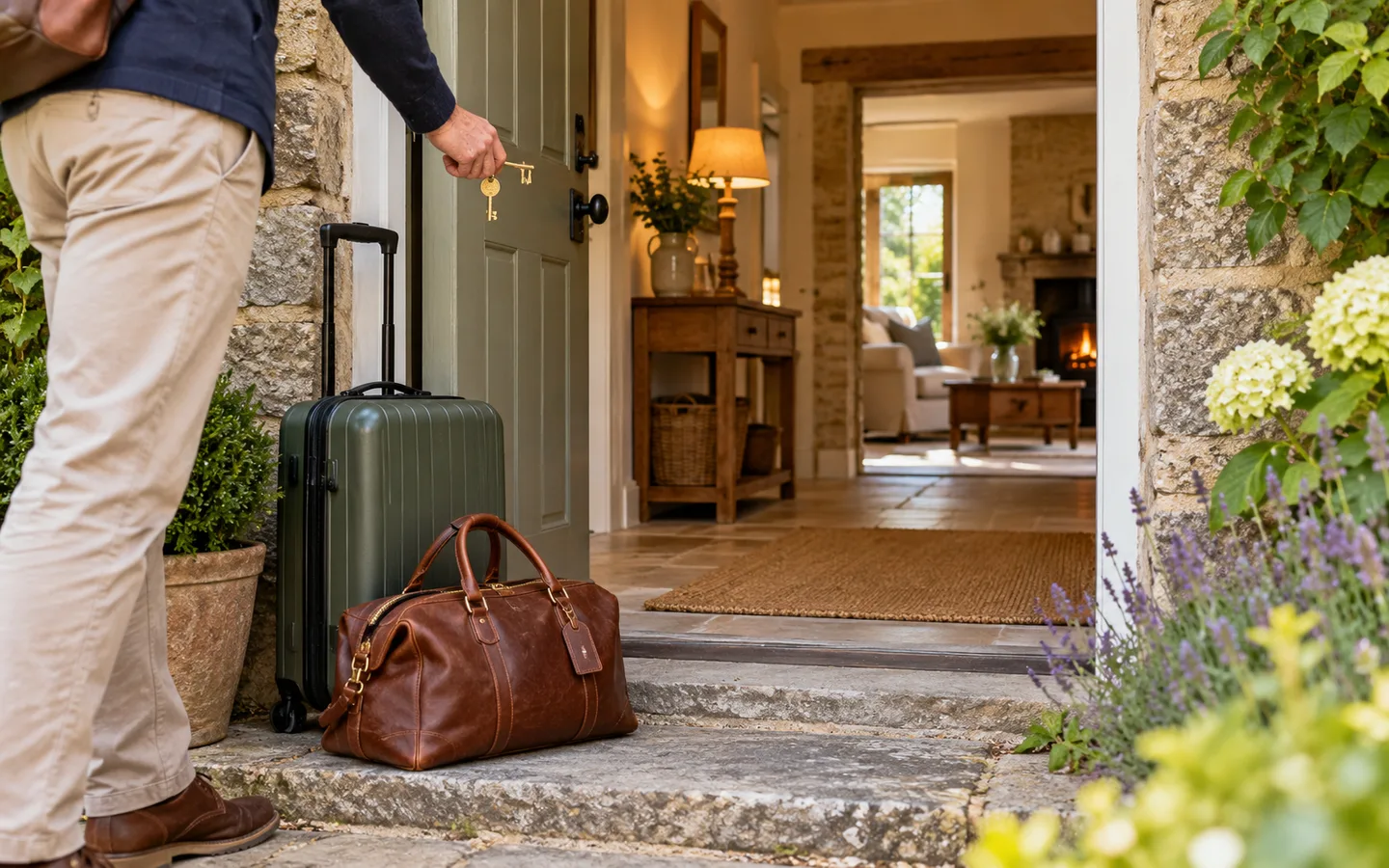
A guest arriving in the evening is unlikely to start by reading the history of the house. They may want to put down their bags, connect a phone, adjust the room temperature and work out what to eat.
A first-night essentials page brings those immediate answers together. It can be a short opening section of your guest guide, with links to the fuller instructions when needed.
Follow the order of the evening
Start with the entrance and the place to put belongings. Then cover the connection details, everyday comfort controls and the few supplies guests are likely to look for straight away.
Keep the order grounded in your property. If visitors enter through a boot room, explain where coats and shoes go. If the accommodation has an unfamiliar light switch or a separate hot-water control, point to the correct instructions.
Link to tested operating steps for the actual equipment. The essentials page should help guests find those steps without duplicating an entire appliance manual.
Answer the kitchen questions
Tell guests where to find drinking glasses, mugs and any provisions you supply. Describe the welcome items accurately so people know what to expect. If no food is provided, do not let a generic “welcome hamper” phrase survive from a template.
Give one or two practical options for obtaining food, with links to the venues' own information. Guests can check opening times and availability before setting out or ordering. Include any property-specific delivery detail, such as the entrance a driver should use.
A short, useful selection is enough here. Save the longer list of restaurants and outings for your local recommendations section.
Make help easy to find
Keep your contact route visible and explain how guests should report a problem with the property. If someone else covers evenings, make sure the handover is real and the details are current before mentioning it.
Do not promise instant replies or round-the-clock support unless you provide them. Clear expectations are more useful than reassuring wording that does not match your arrangements.
Include the full property address where guests can find it readily. Keep essential contact information available in the arrival message or on a printed card as well as in the digital guide.
Try this opening-page outline
| Section | Information to add |
|---|---|
| Welcome in | Where to leave bags, coats and shoes |
| Get connected | Link to Wi-Fi details and printed backup location |
| Get comfortable | Location of everyday heating, lighting and hot-water instructions |
| Find the basics | Drinking glasses, provided supplies and relevant storage |
| Plan dinner | A few food options and current information links |
| Need a hand? | Host contact route and full property address |
Use short sentences and descriptive links. “Heating controls” gives guests a clearer destination than a repeated “read more”. Replace broad claims such as “everything you need” with the specific things you provide.
Keep later decisions out of the way
Checkout details and day-trip ideas belong in the guide, but they do not all need space on this opening page. Give them clear navigation so guests can return when the information becomes relevant.
For pre-arrival information, see what to send guests before check-in. The first-night page takes over once visitors have reached the property.
Before sharing, open the guest link on a phone and imagine arriving with luggage and a low battery. Can you find the connection details, comfort instructions and contact route quickly? Use that check to shorten the page and improve the labels.